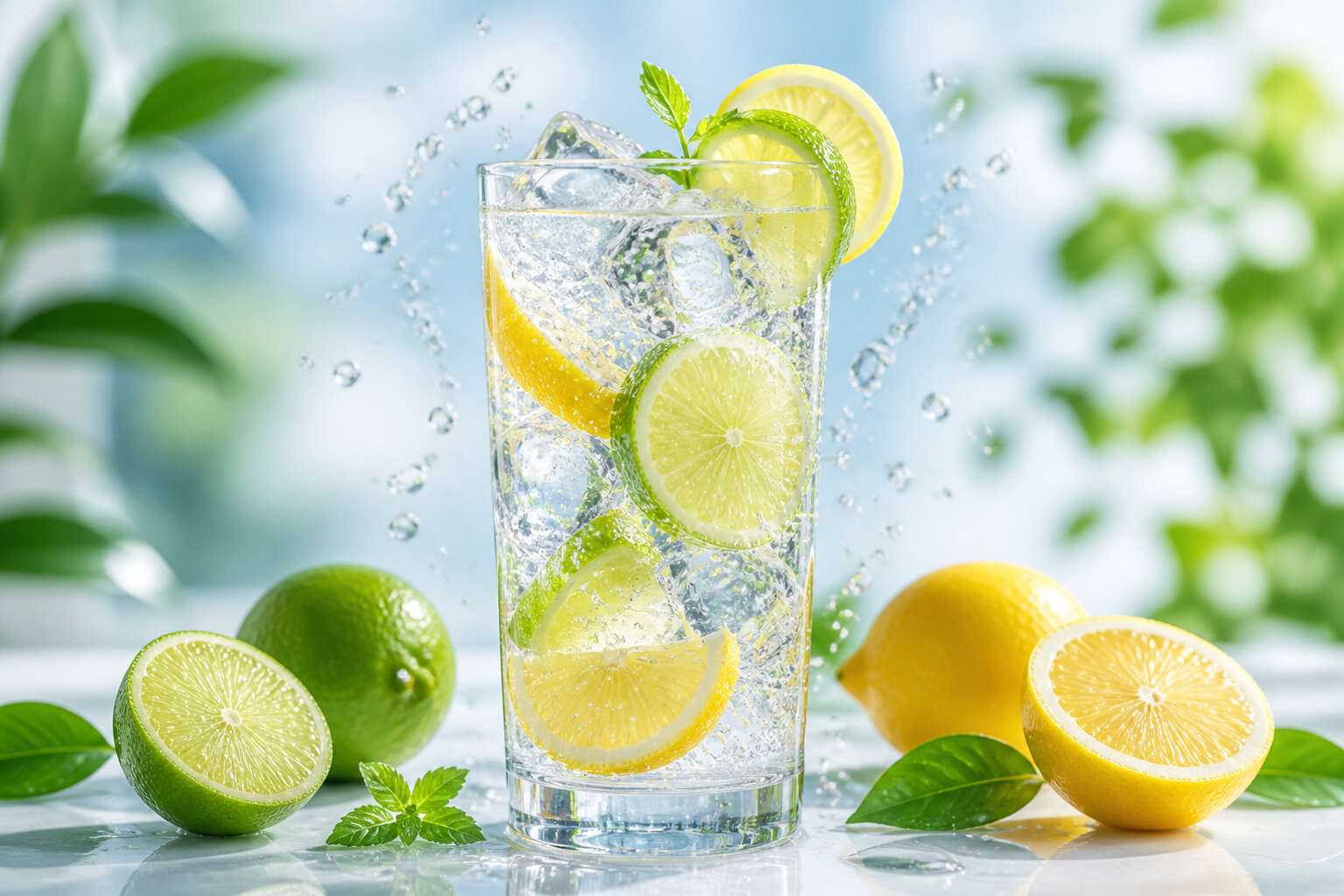
Why Bubbly Water Wins Over Soda
Breaking the Sugar Habit
The average South African swallows more than 30 teaspoons of sugar daily, much of it dissolved into fizzy drinks. That load fuels obesity, type 2 diabetes, and decaying teeth. Flavored sparkling water zero calories eliminates that load completely. It keeps the effervescence. It keeps the crisp aftershock. It abandons the glucose.
Carbonation itself does the work. The sharp CO2 bite lands on the back of the throat. It registers as a satisfying sensory event with none of the metabolic cost. I made the change three months ago. The first week was awkward. By the second, conventional soda tasted syrupy and dull. My palate had adjusted. The burdens that lift once sugar exits:
- Blood glucose volatility and the subsequent fatigue
- Insulin excursions that promote fat deposition
- Enamel erosion from acidic sugary residue
Same ritual. Same cold can. Same satisfying fizz! With flavored sparkling water zero calories, the outcome is entirely different.
A Palette of Natural Essences
Walk down any South African supermarket aisle and you will see rows of brightly coloured sodas. Flavored sparkling water zero calories offers a different proposition. It whispers with citrus peel, berry zest, or a hint of elderflower.
The essences are extracted, not manufactured. A good bubbly water tastes like the fruit smelled at the market, not like a candy version. The palate reads these natural notes as clean and bright. That is the whole trick.
- Lime essence cuts through rich food
- Berry notes linger without sticking
- Citrus oils provide the aroma that drives satisfaction
This is why bubbly water wins. Flavored sparkling water zero calories pairs with braai meat, spicy curries, or a quiet evening at home. The effervescence cleanses. The flavour stays in the glass, not on your tongue. What a relief!
Consumer Trends Toward Better-For-You Drinks
South African consumers are quietly rewriting the rules of refreshment. Soda volumes have slipped for three straight years, while flavored sparkling water zero calories becomes a staple in weekend coolers and office fridges. I notice this in my own circle: friends who once reached for a sweetened cola now grab a can of sparkling water without a second thought.
The motivations vary, but a few patterns stand out:
- People want hydration without the sugar crash
- Brands are innovating with local botanicals and citrus profiles
- Pricing has become competitive with mainstream sodas
This is a structural shift, not a passing preference. Retailers are doubling shelf space for flavored sparkling water zero calories as shoppers vote with their wallets. The better-for-you movement has moved beyond niche health stores into township spaza shops and national chains. That breadth of availability signals something lasting.
The Sensory Appeal of Effervescence
The first sensation is a sharp, clean bite. Carbonation activates the tongue in ways still water cannot. The fizz carries the aroma upward, so the nose catches citrus or botanicals before the liquid lands. With flavored sparkling water zero calories, the experience becomes layered. I keep returning to that mouthfeel. The bubbles provide texture, the essence provides character, and the finish stays dry and light.
Effervescence also cleanses the palate between sips and after rich dishes. Soda, by comparison, leaves a syrupy coating on the tongue.
Here is what drinkers notice most:
- The bite is immediate and lively.
- The carbonation clears the palate.
- The refreshment lasts longer without residue.
That sequence of sensations is hard to replicate. No wonder flavored sparkling water zero calories is earning space in South African fridges!
Decoding the Nutrition Facts
Understanding Zero-Calorie Claims
The small print on a can of flavored sparkling water zero calories can surprise you. In South Africa, food labelling laws permit a zero calorie claim when a single serving holds less than 4 kilojoules. That threshold is low enough that the body registers almost nothing. For anyone reaching for flavored sparkling water zero calories, the serving size matters. I have seen shoppers assume a 330 ml can and a 500 ml bottle carry identical facts. They often do not.
Here is what the label actually tells you.
- 0 kJ per serving means the energy content falls below the legal rounding threshold.
- A larger bottle may list multiple servings, so the zero calorie claim applies per portion, not per package.
The total kilojoules across a whole bottle remain negligible. That is the essence of the zero calorie claim. It does not mean the liquid contains no molecules. It means the energy value is effectively nothing. For practical purposes, your body treats that can the same as a glass of water.
Natural Flavors vs. Artificial Additives
The words “natural flavors” hide more than they reveal. In South Africa, a flavor labeled natural only has to start from a plant or animal source. The extraction can involve solvents and heat. Artificial additives are built in a lab from synthetic chemicals. Both can end up in flavored sparkling water zero calories with the same clean label appeal.
- Natural flavors must derive from plant or animal sources.
- Artificial flavors use synthetic chemicals to mimic taste.
- Neither alters the energy content on the label.
You might assume natural means purer. I have seen that assumption fail. Your palate registers the difference less than you expect. The molecules interact with the same taste receptors. Sourcing is the real distinction. Read the label if that distinction matters to you.
Electrolytes and Mineral Additions
The nutrition panel of flavored sparkling water zero calories can read like a cryptic invitation. Electrolytes appear under modest headings: sodium, potassium, magnesium. These minerals do not alter the energy content. They exist to modulate taste and perceived body. A 330 ml can might list 12 mg of sodium and 25 mg of potassium. The figures seem trivial, yet they change the entire mouthfeel.
Typical mineral additions include:
- Sodium chloride for a crisper finish
- Potassium bicarbonate to soften acidity
- Magnesium sulfate for a faint minerality
Minerals also govern bubble behaviour. Harder water holds carbon dioxide differently, yielding a finer or coarser fizz. The same formula across cities can taste noticeably different due to trace ions alone. That is a neat trick for a drink that promises nothing.
Sodium Content Comparisons
Sodium appears on the label with minimal fanfare. For flavored sparkling water zero calories, the numbers vary wildly. A 330 ml can might show 5 mg; another brand reaches 45 mg. Compare that to a standard fruit juice at 10 mg or a sports drink at 50 mg. The sodium chloride does not add energy, but it changes how the fizz lands on the tongue.
- Brand A: 5 mg per can
- Brand B: 25 mg per can
- Brand C: 45 mg per can
The variation matters because sodium amplifies the perception of sweetness and acidity. In South Africa, where water hardness differs by region, the same product can taste sharper in Cape Town than in Johannesburg. That is why reading the panel matters.
Sweetener-Free Confidence
The nutrition label rarely receives applause. Yet a quick scan reveals the real plot twist: flavored sparkling water zero calories often relies on nothing but water, bubbles, and essence. Confidence comes from reading past the marketing and checking for sweeteners like sucralose or stevia. When those terms are absent, the drink earns its name.
A 330 ml can typically lists zero grams of sugar, zero carbohydrates, and zero artificial anything. That monotony is a feature! The fizz carries the flavor, not a chemical substitute. In South Africa, where consumers grow increasingly label-literate, this transparency builds trust.
Some cans carry a boastful “no sweetener” note. Others keep quiet, betting you will inspect the fine print. Either way, the nutrition facts deliver a simple verdict: nothing hidden, nothing sweet, nothing to fear.
Physical Effects of Your Favorite Fizz
Hydration and Satiety Benefits
Your body reads a can of flavored sparkling water zero calories as a tangible event. The carbon dioxide stretches the gastric wall, activating stretch receptors that signal fullness to the brain. That sensation is real satiety, the same feedback that ends a meal. The bubbles deliver no energy, yet they satisfy a physical need!
Hydration follows its own route. Flavored sparkling water zero calories provides the same hydration as still water, and carbonation does not alter absorption. Each swallow replenishes tissue fluids while the calorie count remains zero.
This combination changes daily behavior. The fullness from the fizz reduces the urge to snack. The mind learns to trust this signal. The hydration maintains energy without glucose spikes.
Consider the repetition:
- Each can adds toward daily fluid goals.
- The slower drinking pace extends the satisfaction.
- The empty calorie load keeps the body in balance.
Acid Erosion Risks to Enamel
The fizz that makes flavored sparkling water zero calories so refreshing carries a physical consequence I rarely see discussed. Carbonic acid forms when carbon dioxide dissolves in water, dropping the pH to roughly 3.5 to 4.5. Your enamel begins to demineralize at pH levels below 5.5. That places most sparkling waters squarely in the risk zone.
Consider the pattern:
- Each sip bathes teeth in mildly acidic liquid
- The bubbles extend contact time across tooth surfaces
- Frequent sipping prolongs acid exposure
Saliva buffers acidity, but it needs time to restore neutral pH. A single can typically returns to baseline within 30 to 60 minutes. Drinking flavored sparkling water zero calories continuously, however, keeps enamel vulnerable. The erosion risk compounds when you sip slowly over hours rather than finishing the can promptly. Some studies indicate citrus-flavoured varieties carry higher acidity than plain options.
Gastrointestinal Considerations
Nearly four in ten adults report bloating after carbonated beverages, a 2022 consumer survey found. The cause is simple: swallowed carbon dioxide expands inside the stomach, pressing on the gastric wall. Flavored sparkling water zero calories creates this pressure without any caloric load, which appeals to many.
Gastrointestinal reactions are personal. Some people belch frequently as the body releases trapped gas. Others experience a false fullness that mimics satiety. For individuals with reflux, carbonation can relax the lower esophageal sphincter, letting acid travel upward.
- Bloating from gas accumulation
- Belching after quick consumption
- Heartburn in predisposed people
Drinking speed matters. A fast pour forces more CO2 into the gut. Sipping slowly spreads the gas over time, but that habit changes stomach pressure. Flavored sparkling water zero calories behaves differently for each person, so observation is essential.
Impact on Appetite and Cravings
Carbonation alters gastric stretch receptors, which send satiety signals to the brain. A 2021 study noted that CO2 triggers a mild increase in the hunger hormone ghrelin, yet the effect varies. For many South Africans, flavored sparkling water zero calories provides a sensory pause between meals. The bubbles create a tactile fullness that can curb impulsive snacking. However, some people report heightened cravings after drinking, because the palate expects sweetness that never arrives. This mismatch can lead to seeking food. Consider these physical responses:
- Stomach distension from gas, which reduces immediate hunger
- Delayed gastric emptying, prolonging the feeling of fullness
- Activation of taste receptors that may amplify desire for salty snacks
The interplay between effervescence and appetite remains individual. I have found that observing your own reactions reveals how this drink affects your hunger signals.
Choosing the Right Can or Bottle
Reading Ingredient Labels Like a Pro
The South African sun beats down on the shop shelf, and your hand hovers between a slim can and a sturdy bottle. Aluminium shields the drink from light damage, preserving delicate essences. Glass bottles show the liquid’s true clarity. The lining matters too. Some cans use BPA-free coatings, while older designs still leak compounds. Choose the container that keeps fizz intact and flavour honest.
When reading labels, check these markers:
- Scan for natural flavours alone, never artificial additives.
- Confirm sodium sits below 10mg per serving.
- Count the total ingredients. Three or fewer wins.
A true flavored sparkling water zero calories brand stays transparent, and its label proves it. Another flavored sparkling water zero calories product stuffed with preservatives shows itself in the fine print. The vessel and the label work together to reveal the drink’s quality. Trust them, and the first sip confirms the choice.
Comparing Leading Retail Brands
The vessel determines the last sip. A thin can loses its chill in minutes, while a sturdy bottle holds cold through a long braai. South African leading retail brands now offer both, but their quality diverges in the details.
Compare two flavored sparkling water zero calories products side by side. Check the seam with your thumb, then twist either cap. A smooth closure indicates careful sealing. I always look for the pressure mark near the neck; it shows the gas level at production. For a quick evaluation, use these markers:
- Glass weight: heavier feels premium but strains the wrist.
- Can lining: BPA free or a polymer alternative.
- Label placement: straight edges mean automated precision.
The best retail brands keep those details consistent across every batch. That consistency is what makes the choice worth your trust.
Premium and Craft Seltzer Options
South Africans consume over 12 million litres of flavored sparkling water zero calories each year, yet most of us grab containers without a second thought. Premium craft options demand more attention. Glass bottles preserve carbonation beautifully, but they can shatter inside a cooler bag. Aluminum cans survive a chaotic braai, though thin metal loses its chill fast.
Here is what I inspect before paying craft prices: 1) the cap’s resistance when twisting open, 2) the glass’s thickness near the neck, 3) the can’s pull tab sturdiness. These small markers reveal a producer’s care. Choose the vessel that matches your setting. A Sunday picnic calls for unbreakable cans, while a dinner party welcomes heavy glass with a satisfying heft.
Cost-Effectiveness and Bulk Purchasing
In South Africa, a 330ml can of flavored sparkling water zero calories can cost almost triple the price per litre of a 1.5L bottle. That gap matters when you drink it daily. Bulk purchasing changes the maths. I always check the rand per litre before grabbing a case.
- Check best-before dates on crates.
- Compare unit prices per litre.
- Confirm return policies for damaged stock.
But the cheaper bottle only wins if it gets finished. Once opened, carbonation fades within hours, and a half-empty bottle often gets dumped. Cans keep each serving sealed, reducing waste where one person drinks quickly and another sips slowly.
For a braai or packed lunches, cans hold up. For home use, large bottles make sense if you empty them the same day. The cost-effective choice depends on your consumption speed, not just the sticker price. Flavored sparkling water zero calories serves both purposes when matched to your pace.
Packaging and Environmental Footprint
The environmental ledger of flavored sparkling water zero calories is rarely printed on the label. Aluminium cans offer endless recyclability but demand intense energy to forge. PET bottles ride lighter on trucks, cutting transport emissions, yet South Africa’s recycling rates for plastic remain sobering. Glass, beloved for its mouthfeel, punishes every kilometre with sheer mass.
The packaging choice becomes a moral accounting of weight versus reusability:
- Aluminium loops back into production without losing strength.
- PET weakens after each recycle, eventually becoming waste.
- Glass is infinitely recyclable but costly to move.
I find myself staring at the shelf, weighing my daily flavored sparkling water zero calories against the footprint of its vessel. The greener option is the one that actually gets recycled, not the one with the greenest marketing.
Caffeine-Infused Varieties
Caffeine-infused flavored sparkling water zero calories changes the container debate. The can holds carbonation fiercely, which matters when the caffeine needs to arrive with a sharp, cold bite. The bottle offers a slower rhythm, a resealable companion for a long afternoon.
I pick the vessel based on where I will drink it.
- Aluminium cans chill fast and protect the effervescence.
- PET bottles are lighter in a backpack and resealable mid-drive.
- Glass carries the heat slowly, which suits a fridge-to-desk commute.
In South Africa, the sun punishes indecision. A lukewarm caffeine drink is a letdown. The right container keeps the drink cold enough to enjoy, which is the entire point. So I match the caffeine hit to the moment.
Creative Ways to Flavor Up Your Life
Crafting Signature Spritzers
The heat of a Highveld afternoon demands more than plain water. A glass of flavored sparkling water zero calories serves as a starting point, and the real craft begins when you add ingredients from your own garden.
Take a single sprig of rosemary. It changes an ordinary citrus spritzer into something fragrant and almost ceremonial. Drop in frozen berries that double as ice cubes. Add a curl of orange peel. It never fails to impress!
A few combinations have proven themselves in my kitchen:
- Cucumber ribbons with mint and a squeeze of lime
- Roasted peach slices with fresh basil
- Ginger shavings with a star anise pod
These small gestures elevate flavored sparkling water zero calories beyond simple refreshment. They turn the daily act of drinking into a moment of deliberate craft, and every sip reflects a choice made with intention.
Pairing with Meals and Snacks
Pairing flavored sparkling water zero calories with a meal is a careful arrangement. The clean bite of elderflower fizz handles the rich salinity of grilled snoek. A berry-forward sparkler balances the tang of tomato bredie. Serve both in clear glasses, and the table reads the intention before anyone pours!
Three pairings from my own table:
- Lime and mint with creamy bobotie
- Passion fruit bubbles beside spicy peri-peri chicken
- Citrus sparkler against aged cheddar and biltong
The carbonation lingers between bites, resetting the palate. I watch guests reach for another glass before touching their forks again.
Using Fizz in Marinades and Sauces
Marinades hold their complexities close. A splash of flavored sparkling water zero calories changes the meat’s architecture. The bubbles carry citrus or elderflower deep into the fibres, softening the cut. I have used a berry sparkler to deglaze a pan of springbok shanks, and the sauce turned the colour of dark wine, sharp and alive.
The possibilities take simple forms:
- A lime and mint sparkler, reduced by half, whisked into a butter sauce for linefish.
- A passion fruit fizz working overnight in the braai marinade for lamb chops.
The same principle governs sauces. A reduction of flavored sparkling water zero calories replaces stock with something lighter, almost restless. The sauce gains lift without the weight of sugar or salt, and the carbonation leaves a faint, pleasant bite against the tongue.
Mocktail Mixology Essentials
A bar cart without flavored sparkling water zero calories is a quiet failure. The bubbles carry aromatics where syrups only add weight. For a proper mocktail, build from the fizz up: ice, a citrus squeeze, then the pour. The drink assembles itself.
At a Durban sundowner, I learned to muddle thyme with naartjie segments. A grapefruit sparkler over the top cuts through the herb. Match the water to the leaf, not the fruit. That is the whole trick.
Peach sparkler with basil and a whisper of ginger.
Elderflower fizz with cucumber ribbons.
Berry seltzer with rosemary and lime.
Fold the ingredients with a long spoon. Never shake. Shaking flattens the carbonation and ruins the bite. The best mocktails are layered, served immediately, and left alone. Flavored sparkling water zero calories does the rest of the work.
Infusing with Fresh Herbs and Citrus
Inside a Cape Town herb garden, the difference between a dull drink and a vivid one is measured in seconds. Rose geranium leaves, bruised between thumb and forefinger, release compounds that commercial syrups cannot replicate. Drop them into a glass alongside a spiral of lemon peel, then pour in flavored sparkling water zero calories. The water carries the aromatics upward; the citrus adds structure.
For sharper profiles, alternate these pairings:
- Lemon verbena with slivered ginger
- Buchu with a wedge of lime
- Mint with orange discs
- Coriander and grapefruit segments
Time completes the infusion. Ten minutes of steeping transforms a plain bottle into something layered. No shaking, no stirring.

0 Comments