Why Carbonated Water Deserves a Spot in Your Shopping Cart
Health Benefits of Sparkling Water vs. Still Water
The quiet hiss of a freshly opened bottle promises more than refreshment. Sparkling water delivers the same hydrating essence as still water, yet arrives with a sensory ceremony that commands attention. Clinical observations suggest that carbonation can enhance satiety, making it a subtle ally for mindful consumers.
Consider the tangible benefits:
- Equivalent hydration without added sugars
- Improved swallowing function in some individuals
- Reduced bloating compared to sugary sodas
The bubbles encourage slower sipping, which may promote digestive ease. For South African shoppers, finding quality sparkling water on sale transforms an occasional indulgence into a daily ritual! The sparkling water on sale at your local retailer offers an affordable path to elevate ordinary moments. This beverage choice asserts that wellness need not taste like sacrifice.
How Flavored Seltzer Can Curb Sugar Cravings
The checkout queue offers a sociology lesson. The basket of a sharp shopper often contains a bottle of sparkling water on sale, chosen with the deliberation once reserved for wine. Flavored seltzer performs a quiet rebellion against sugary drinks. The citrus pops, the fizz stings, and no syrup lurks in the aftermath.
Consider the afternoon slump. A hand reaches for something cold. The flavored option provides a moment of theatre, engaging the palate with sharpness and aroma.
- Raspberry that lingers
- Lime that cuts the heat
- Elderflower that elevates
These small interruptions answer the craving for sweetness without the calories. The sugar craving fades because the palate has been entertained, not placated. The practical charm of a well-stocked fridge rests on this quiet arithmetic.
Environmental Impact: Cans vs. Bottles
A single aluminium can holds roughly 330ml of carbonated water and weighs about 15 grams. A glass bottle for the same volume weighs ten times more. Transport emissions scale accordingly. When you notice sparkling water on sale, the packaging decision matters as much as the price.
The recycling process favours metal. South Africa recovers over 70% of aluminium beverage cans, one of the highest rates globally! Glass recycling sits near 40%. Plastic recycling rates remain far lower. Each material carries different energy demands:
- Aluminium: melts down and recirculates without losing strength
- Glass: heavy to haul, though refillable systems help
- PET plastic: lightweight but rarely returns to food-grade quality
Comparison of Popular Brands: LaCroix, Perrier, and More
Nearly two thirds of beverage shoppers in South Africa wait for promotions before stocking up, according to Nielsen data. That habit makes seeing sparkling water on sale a rare chance to explore beyond your usual pick.
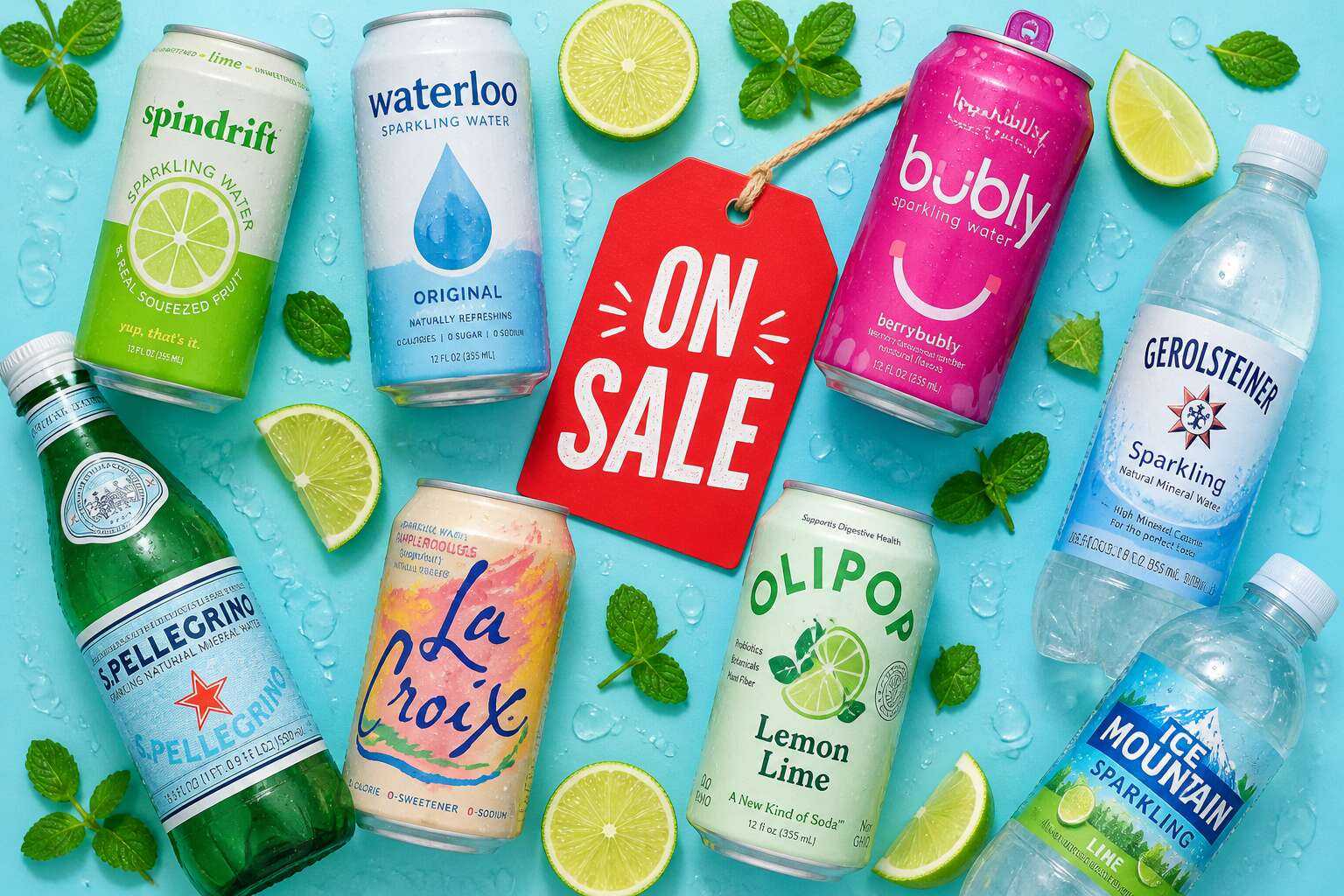
LaCroix, Perrier, and San Pellegrino each create a different mouthfeel. LaCroix leans on subtle essence, almost aromatic. Perrier forces a sharp, peppy carbonation. San Pellegrino offers softer bubbles with a mineral aftertaste. I always check the cans or bottles for the gas pressure, since that dictates the experience.
- LaCroix: light and dry, with pamplemousse as the strongest profile
- Perrier: robust fizz, ideal for diluting with citrus slices
- San Pellegrino: delicate effervescence, good for pairing with meals
Your shopping cart only holds so much room, and a discount makes trialing one from each style feasible. That is the practical magic of a promotion.
Best Times to Score Cheap Seltzer and Club Soda
Seasonal Sales Cycles: Summer and New Year Peaks
December brings the first serious discount season for seltzer. In South Africa, summer heat drives demand from November to February, so retailers push sparkling water on sale to capture holiday shoppers. Prices often dip before Christmas, then spike again in early January.
The New Year creates a second peak. People resolve to drop sugary drinks, and club soda becomes a default choice. Grocers in Johannesburg and Durban routinely slash prices during the first two weeks of January. I have watched a 24 pack drop by a third during that window.
- Early December for pre holiday stock ups.
- Mid January for post resolution markdowns.
Regional promotions vary. Check local circulars weekly, since summer rainfall patterns shift demand.
Holiday Weekend Promotions and Doorbusters
Holiday weekends follow their own logic. Retailers treat long weekends like Easter and Heritage Day as mini New Years, cutting prices to clear warehouse stock. The winning move is to shop the Thursday before a public holiday, not the holiday itself. Doorbusters on fizzy drinks often appear on the first page of store circulars, tucked beside braai specials.
- Good Friday weekend
- Freedom Day (27 April)
- Youth Day (16 June)
- Heritage Day (24 September)
I once grabbed a crate of sparkling water on sale for half price during the Easter Saturday rush. The trick is ignoring the crowd and heading straight for the beverage aisle. Club soda shelves get restocked overnight, so early morning runs beat the chaos.
End-of-Month Clearance and Inventory Rotations
Retail inventory cycles are merciless. By the third week of the month, warehouse managers stare down overstocked pallets of club soda and seltzer, knowing the next delivery arrives on the first. That pressure translates directly to shelf prices.
End-of-month clearance follows a pattern. In South African stores, stock rotation schedules mean fizzy drinks get marked down between the 25th and the 30th. Selection is random, but the discount is consistent. I check labels for production dates. Older batches hit the discount bin first.
Some stores run predictable patterns:
– Beverage sections reset on Tuesday mornings
– Clearance stickers appear Thursday afternoons
– Deep cuts land on the final Saturday of the month
This is how sparkling water on sale becomes a ritual of observation, not impulse.
Online Flash Sales and Lightning Deals
South African shoppers often assume the best deals live in store aisles. Online flash sales tell a different story. E commerce platforms refresh beverage promotions on unpredictable schedules, but certain windows appear consistently. Midweek afternoons, particularly Tuesdays and Wednesdays between 2 p.m. and 4 p.m., see the highest concentration of lightning deals. The algorithm rotates discounts every few hours, and slower traffic lets stock linger.
A seller on Takealot once told me that club soda bundles usually get a price drop when warehouse stock crosses a 70 percent threshold. That triggers a storewide markdown. Buyers who set alerts often catch sparkling water on sale within 48 hours. I have watched a flash deal disappear in fifteen minutes.
The unusual pattern involves weekend evening restocks. Some retailers sync online inventory with store returns, so Sunday nights bring sudden availability of discontinued flavors. These are not advertised. They simply appear with a discount marker. That is where sparkling water on sale happens most reliably.
Where to Find the Biggest Discounts on Bubbly Beverages
Warehouse Clubs: Costco and Sam’s Club
Walking into a warehouse club is an exercise in scale. Pallets of sparkling water on sale stretch toward the rafters, demanding a second look at your trolley’s capacity. Costco and Sam’s Club secure the lowest unit prices not through seasonal gimmicks but through sheer purchasing force. Their store brands, Kirkland and Member’s Mark, deliver a plain, crisp carbonation that rivals national labels at half the cost. The most dramatic markdowns rest near the back wall, just before the refrigerated sections.
- Buying by the flat typically yields a double-digit percentage savings.
- Member-only coupons apply instantly at checkout, trimming the total further.
This is the purest form of bulk-value shopping. The carbonation is consistent, the cases are heavy, and the per-unit math works in your favor every time!
Grocery Store Loyalty Programs and Digital Coupons
Every rand saved on groceries is a small act of self belief. Grocery store loyalty programs in South Africa, from Checkers Xtra Savings to Pick n Pay Smart Shopper, quietly reward the faithful. They turn routine shopping into a hunt for sparkling water on sale.
Digital coupons arrive weekly. Load them before you shop. Watch the app recalculate your basket.
- Loyalty points convert to rand off.
- Digital coupons stack with weekly specials.
- The app holds the best deals.
I have stood at the checkout and watched the price fall. The machine hums. The total shrinks. That moment feels like winning!
Amazon Subscribe & Save and Warehouse Deals
Amazon South Africa’s Subscribe & Save programme quietly cuts the cost of bubbly water. The first delivery arrives at full price. The second drops by 5%. The fifth drops by 15%. I have watched my monthly carton of Perrier shrink in price without lifting a finger!
Warehouse Deals add another layer. Returned pallets, dented boxes, and overstocked flavours appear at steep markdowns. The packaging may carry a scuff. The water inside remains perfectly carbonated. That is the trade, and it is worth making for anyone hunting sparkling water on sale.
- Subscribe & Save discounts compound with each delivery
- Warehouse Deals refresh unpredictably
- Subscription pricing rarely applies to open-box stock
Local Discount Stores and Ethnic Markets
Walk into any Chinese supermarket in Johannesburg and you will spot shelves stacked with imported seltzer. Importers clear containers at cut rates. Retailers pass the savings along. A 500ml bottle of sparkling water costs less than a third of the price at a petrol station. That is the reality of ethnic markets.
Local discount stores play a different game. They buy overproduction, close-dated stock, and odd flavours that big chains refuse. Then they price to move. I have grabbed a twelve-pack for less than the cost of a sandwich!
- Check the pallets near the registers. That is where the deals hide.
- Ask staff when deliveries land. Tuesday mornings work best.
Prices shift weekly. The hunt for sparkling water on sale never ends if you know where to look.
How to Compare Prices and Calculate the Best Value
Price Per Ounce: The Real Metric to Watch
Most shoppers compare total price, not the unit cost. That mistake can cost you R50 a month. The only honest comparison is the price per ounce. To find it, divide the total rand cost by the number of fluid ounces in the package. It is a simple arithmetic act that reveals hidden value, yet most shoppers skip it.
When you spot sparkling water on sale, do not trust the sticker immediately. Check the volume on the back. A 330ml can at R8 seems affordable, but a 1 litre bottle at R15 gives you more for less. Here is the method I use:
- Find the fluid ounces printed on the side.
- Divide the price by that number.
The result is your true cost per ounce! I have seen bulk packs cost more per ounce than single bottles. That number is definitive. Next time you see sparkling water on sale, let the ounces guide your purchase, not the promotional banner.
Evaluating Bulk Packs vs. Individual Cans
Bulk packs look like the obvious winner, but they often hide a different story. Retailers know shoppers assume bigger means cheaper. That assumption can cost you. A 24-pack at R159 works out to R6.63 per can. A loose can at R7 might seem pricier. Do the full calculation before you commit.
I have seen bulk packs fail the value test. Individual cans offer flexibility. Bulk packs offer convenience. Neither guarantees value. The real question is how many ounces you get per rand. That is the only number that matters.
- Check the fluid ounces on the pack
- Divide the total price by total ounces
- Compare that figure to the single can rate
When you find sparkling water on sale, the promotional banner means nothing if the unit cost is higher. The numbers tell the real story.
Hidden Costs: Shipping Fees and Minimum Quantities
When you spot sparkling water on sale from an online retailer, the shelf price is only the beginning. Shipping fees can outweigh the discount. A R99 case might carry R80 delivery if you miss the free shipping threshold. Minimum quantities create a separate hurdle. You may need to buy five cases to unlock wholesale pricing.
Compare the final landed cost, not the promo price. Follow these steps:
– Check whether delivery changes by weight or volume.
– Confirm if the minimum order applies before discounts.
– Calculate the total per can including delivery.
That full figure tells you whether the deal still beats your local store. If not, the sparkling water on sale is just a headline.
Using Price-Tracking Tools and Mobile Apps
The most elusive discounts vanish within hours. A shelf price for sparkling water on sale might shift three times in a single week, and your memory of last month’s figure is unreliable. Price-tracking tools solve this by recording the historical movement of every listing.
I use apps that monitor specific products across South African retailers. They alert me when the per-can cost drops below a threshold I set. The data exposes patterns that marketing teams hope you never notice.
Consider what a tracker actually reveals:
– The true baseline price before any markdown
– How frequently the same product cycles through promotions
– Whether the current deal beats the average over 90 days
Without this data, you are guessing. With it, you know exactly when sparkling water on sale deserves your attention and when it is ordinary pricing with a discount label!
Smart Strategies to Stock Up Without Overspending
Setting a Budget for Your Fizzy Hydration Habit
Sparkling water on sale tempts even the most disciplined shopper. In South Africa, a budget for fizzy hydration turns that temptation into a controlled ritual. The first move is calculating your monthly consumption, not estimating it. Track how many units you actually open, then set a ceiling based on that number. A promotional price loses its appeal if you buy twice the volume you can drink. Allocate a specific amount each month, and treat that figure as a boundary, not a suggestion.
Consider these elements when shaping your budget:
- Your household’s weekly intake in litres or units
- The gap between your usual brand and generic options
- A buffer for festive seasons when sparkling water on sale appears more often
Your budget should flex for peak periods, but only within a set limit. Observe your spending patterns over two months, then adjust the allocation accordingly. This approach keeps your pantry stocked and your account intact, even when the sales become relentless.
Rotating Stock and Checking Expiration Dates
When sparkling water on sale catches your eye, resist the urge to fill the trolley. The real work happens after purchase. Rotating stock means placing newer packs behind older ones, so each can is consumed in sequence. I learned this after finding a forgotten case of lime seltzer that had gone flat.
Expiration dates on sparkling water are about quality, not safety. Extended storage dulls carbonation and mutes flavour. Check the stamped dates before you buy, not after. Trust me on this one!
- Sort by date, oldest in front.
- Store away from direct sunlight.
- Keep a tally of what you open.
This method turns a bulk purchase into a measured stash. The next time sparkling water on sale appears, you will know exactly how to manage it.
Mixing and Matching Flavors for Maximum Variety
When sparkling water on sale appears, the savvy shopper treats it as a puzzle, not a frenzy. The trick lies in restraint. Calculate a per-can ceiling before you enter the aisle, then let that number govern your choices. A mixed case of citrus, berry, and botanical flavours prevents palate fatigue and spreads risk across your stash. If one batch disappoints, you still have others.
Consider this approach:
- Assign each flavour a purpose. Morning pick-me-up, afternoon reset, evening wind-down.
- Alternate between bold and mild profiles to keep every sip distinct.
- Reserve one wildcard flavour per haul to test without commitment.
This way, even when sparkling water on sale tempts you toward a single bulk flavour, you walk away with a curated collection. The total price stays modest, yet the variety keeps each can interesting. Your fridge never falls into monotony, and your wallet stays intact. That is the quiet art of a measured bargain. It turns a fleeting promotion into a lasting ritual. Each selection becomes deliberate, and every sip feels chosen rather than accidental.
DIY Carbonation: SodaStream as a Long-Term Solution
Consider the SodaStream, that countertop contrarian. While others chase sparkling water on sale, you produce endless fizz at home. No shipping fees, no can mountains, no expiry anxiety. Just water, gas, and your own tolerance for experimentation.
The long-term maths deserves a glance. Buy a machine once, then refill cylinders at a fraction of retail cost. Over a year, the savings grow quietly. My only warning: you will become insufferable at braais, explaining carbonation levels nobody asked about.
A sensible setup needs a few essentials:
- a sturdy bottle for each family member
- a backup CO2 cylinder
- a flavour syrup only for guests
That last point saves friendships.
Combining Manufacturer Coupons with Store Sales
In South Africa, the dance between manufacturer coupons and store sales can feel like a mirage. Yet, when these two align, the savings on sparkling water on sale become tangible. Open your supermarket’s digital app first, then layer a paper coupon from the weekend newspaper onto that already reduced price.
Stacking works best during double discount events. A store marks a 24 pack down to R120, and a manufacturer coupon shaves off another R30. You walk away paying R90. That is the sweet spot, and it demands a little patience.
- Collect coupons from product packaging and till slips
- Match them to the store’s weekly promo calendar
- Set a phone reminder for Thursday price changes
Most retailers reset promotions on a fixed day. Time your visit for early morning, when shelves are full and coupon stock still exists. The trick is to treat this as a weekly ritual, not a frantic hunt.
Reading Clearance Racks and End Cap Displays
The weekly ritual extends to the clearance racks. R18 for twelve cans of lime seltzer is the prize. The sparkling water on sale there often comes from overstocked seasonal displays or rebranded packaging. End cap displays hide the same opportunities. The cans are fine. The label is simply outdated.
I check the bottom shelf first, where heavy pallets sit unnoticed.
- Scan for stock that arrived with the holiday display.
- Check the shelf edge for old price tags.
- Ask a floor assistant when the next markdown cycle begins.
The box was battered. The fizz was flawless.

0 Comments