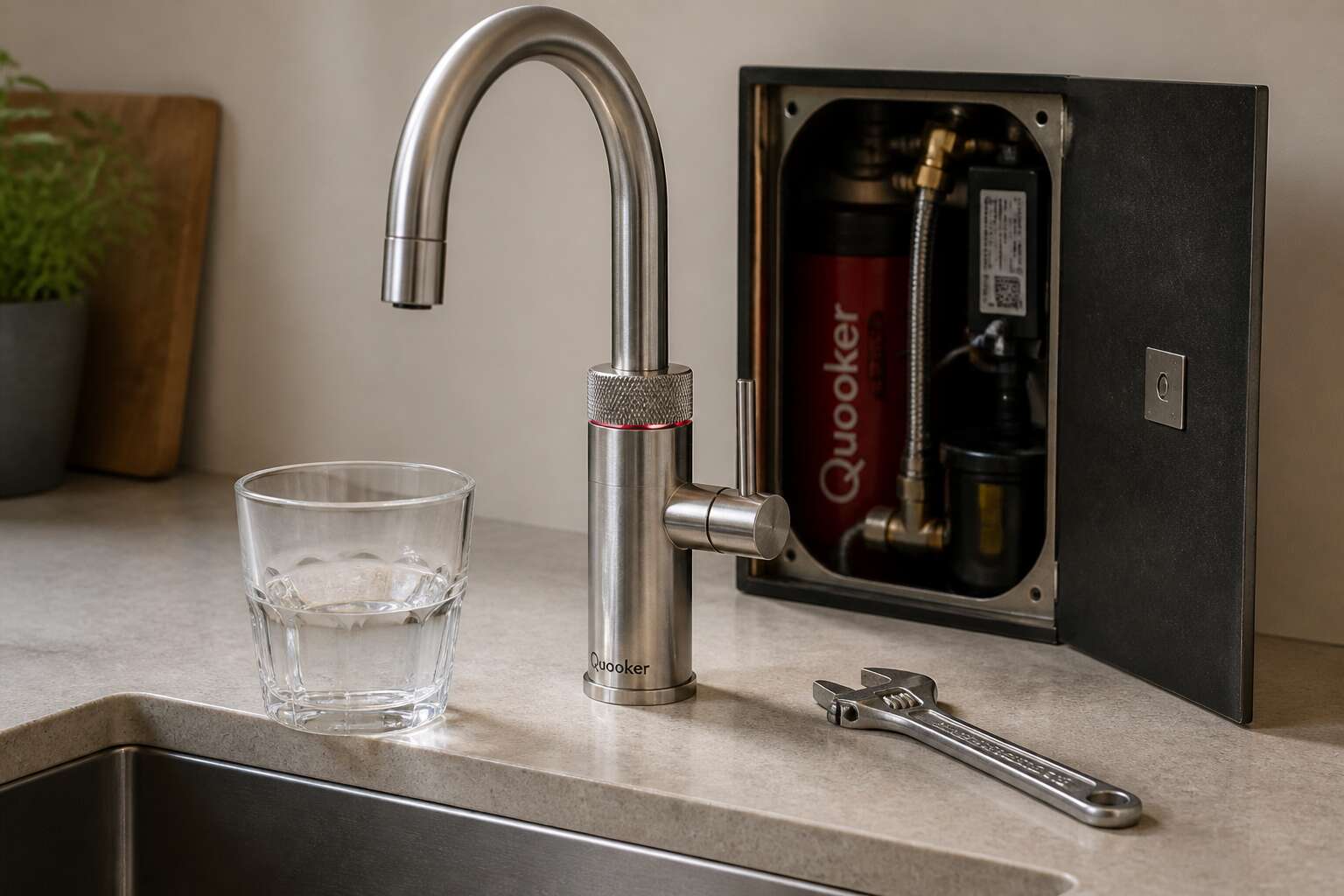
Initial Checks and Safety Considerations
Safety First: Unplug and Turn Off Power
Before you begin any investigation into why your sparkling water quooker not working, sever its connection to the mains. Pull the plug from the wall socket. Turn off the water supply if you can reach the valve. This is not mere caution; it is a necessary act of protection. A Quooker holds boiling water under pressure and stores electricity for instant heating. Both elements can be dangerous when disturbed carelessly.
Check the circuit breaker for tripped switches. A South African home with load shedding can leave appliances in a strange state. If the breaker has flipped, reset it only after confirming the socket is completely dry.
Then wait. Let the machine sit for five full minutes. This allows internal capacitors to discharge stored energy before you touch anything else.
Verifying Water Supply and Pressure
Once the unit is safely powered down, turn your attention to the plumbing. A sparkling water quooker not working often traces back to something as simple as a kinked supply line or a partially closed valve. In South African homes, water pressure can fluctuate wildly, especially during peak hours or after municipal maintenance. Your Quooker needs a steady feed to carbonate properly.
Check the cold water connection behind the unit. Ensure the isolation valve is fully open. If you have a filter system inline, inspect it for blockages. A clogged filter starves the machine of water, which produces weak bubbles or no sparkling water at all. When your sparkling water quooker not working, the pressure test is straightforward. You would be surprised how often this is the culprit.
Here are the usual suspects to examine:
- The main shutoff valve for your home, which may have been turned down.
- The small tap valve under your sink, often closed accidentally.
- The inline water filter cartridge, if present, which needs periodic replacement.
Checking the Control Panel for Error Codes
The machine sits in silence beneath the counter, its metal casing cool to the touch. Silence, however, is rarely empty. When your sparkling water quooker not working, the control panel may hold the first clue. Those small lights and digits are not decoration. They are a record of the unit’s distress.
I have learned to read these signals before examining anything else. The error codes are precise. They indicate temperature faults, pressure losses, or carbonation failures. Some units display a numbered code. Others blink in a sequence that demands interpretation. You must observe the pattern carefully.
- A steady red light, which often indicates a heating element fault.
- A flashing green light, which points to a pressure anomaly.
- A sequence of three blinks, which may signal a sensor problem.
The user manual holds the exact meaning, because codes vary by model. A written record of the sequence proves useful for any technician. The panel speaks. Listen.
Resetting the System
A surprising number of appliance repairs end with a reset that costs nothing. Before assuming the worst about a sparkling water quooker not working, perform basic checks the manual hides. Confirm the isolation switch is on. Look at the rear inlet filter for grit. Listen for the solenoid’s click when you open the tap. These two minutes spare you a false alarm.
Resetting the system is the most direct remedy. Most Quooker models respond to a simple power cycle: switch off at the wall, wait twenty seconds, restore power. Others need a button ritual.
- Press and hold the carbonation button for five seconds.
- Release when the indicator flashes amber.
- Draw a glass of still water to confirm the system is alive.
This reset clears temporary glitches and pressure errors. If your sparkling water quooker not working persists, the problem lies in hardware, not mood.
Inspect the CO2 Cylinder and Carbonation Unit
How to Check the CO2 Cylinder Level
Most flat drinks are not a Quooker malfunction, they are a simple depletion of stored gas. Beneath your counter, a small silver cylinder holds the carbonation force. You cannot see the pressure, but you can measure it with certainty.
First, isolate the cylinder from the unit to ensure an accurate reading. A full tank feels surprisingly heavy, often over one kilogram. A depleted one feels almost hollow. If you have a spare cylinder, compare the heft. This is the fastest physical diagnostic.
- Weigh the cylinder on a bathroom scale and note the result.
- Check the regulator valve for a weak or absent hiss when opened.
- Inspect the pressure gauge if your model has one. A reading in the red zone is a clear verdict.
A cylinder low on gas will produce a sad trickle of bubbles. This is the most common culprit for a sparkling water quooker not working quietly in the background. Replace the tank first before investigating the unit itself. You will save yourself an hour of unnecessary dismantling.
Replacing or Refilling the Cylinder
There is a quiet indignity in a cylinder running dry. It asks for more than a simple diagnosis; it demands acceptance of a mechanical truth. The faint hiss at the regulator valve is the sound of a system sighing its last carbonated breath. You are not repairing the machine, you are feeding it.
Inspect the carbonation unit with a clear head once the new cylinder is fitted. Look for mineral scale or debris around the connection point. That residue is the enemy of a proper seal. A flawed connection will leak pressure silently, leaving you with a sparkling water quooker not working in the exact same manner as an empty tank.
When you do replace the tank, follow a precise sequence.
1. Turn the locking screw counterclockwise to release the spent cylinder.
2. Remove the sealing cap from the new cylinder only after the old one is fully detached.
3. Screw the new cylinder in place and tighten the valve slowly. Do not force it.
4. Run the water for two seconds to pressurise the line.
Refill options vary widely in South Africa. You can exchange the empty tank at a dedicated gas supplier, a local hardware store, or through an authorised appliance technician. The physical act of swapping the weight of the tank feels like a ritual. The heaviness of a full vessel promises a crisp pour. The lightness of an empty one reminds you that every glass of sparkling water is a temporary illusion, sold to you in silver and steel.
Cleaning the Carbonator Nozzle
The diagnostic journey often stalls at the visual inspection. You have checked the obvious suspects, yet a sparkling water quooker not working persists with a stubborn silence. Look at the CO2 cylinder with fresh eyes. A tank that appears full on a scale might still fail if the regulator has shifted during installation. The brass fitting should sit flush, without wobble or cross-threading.
The carbonation unit demands its own scrutiny. This is the chamber where gas meets water, and it collects sediment over time. If you hear a gurgle but watch the bubbles die instantly, scale has likely clogged the injector. This blockage starves the water of gas, producing a flat pour that defeats the purpose of the machine.
Cleaning the carbonator nozzle is a precise task. Remove the nozzle and soak it in a warm vinegar solution for ten minutes to dissolve the mineral film. Use a fine pin to clear the tiny orifice, but never enlarge it with force.
- Inspect the nozzle for a white crust, which indicates hard water deposits.
- Check the rubber seal beneath the nozzle for cracks or hardening.
- Wipe the connection threads with a dry cloth to ensure a snug reattachment.
Once reassembled, the system should regain its pressure. If the gas still fails to infuse, the fault might lie deeper in the valve assembly, where only a professional can reach. But a clean nozzle resolves a surprising number of cases, restoring that familiar hiss of effervescence to your kitchen.
Examining the Gas Regulator
The regulator is the quiet intermediary between pressure and restraint. A sparkling water quooker not working often traces back to a regulator that has drifted from its calibrated setting. You cannot see pressure, only its effects. A hiss that arrives too weak or too aggressive indicates the valve has lost its precision.
Run your finger along the regulator body and the pipe connections. Moisture or frost signals a micro leak. The carbonation unit itself should hold pressure for several seconds after a pour. If it vents immediately, the internal piston may be worn.
- Listen for a rhythmic hiss versus an erratic sputter.
- Turn the regulator knob one full rotation and test the pour.
These observations separate a functional system from a failing one.
Bleeding Excess Air from the System
The cylinder’s weight tells a story before any gauge does. A full steel vessel holds its mass with authority, while an exhausted one feels hauntingly light. Weigh it if you must, but your hands already know. The deeper culprit is often invisible: air trapped in the carbonation unit. Air occupies the space where CO2 should dissolve into water. When a sparkling water quooker not working presents as weak fizz or immediate flatness, bleed that air without hesitation.
Locate the bleed valve above the carbonation chamber. Open it slowly and listen. A sharp expulsion of gas followed by a seal means you have purged the system properly. Repeat this twice for stubborn pockets. This resolves most cases of a sparkling water quooker not working that stem from trapped air. Then test a pour. The carbonation unit should respond with a crisp, sustained hiss. If the gas still sputters, inspect the cylinder’s dip tube. A clogged tube mimics an empty cylinder, and only a full inspection reveals the truth.
Water Flow and Temperature Problems
Why Sparkling Water May Flow Too Slowly
Nothing tests your patience like a trickle when you expect a torrent. A Quooker that delivers sparkling water slowly often hides a temperature problem. Warm water cannot hold CO2 effectively, so the carbonator throttles the flow to preserve fizz. That sluggish stream may be your sparkling water quooker not working at full capacity, and I have seen this issue repeatedly in South African kitchens.
The ideal incoming water temperature sits between 8 and 12 degrees Celsius. When it climbs higher:
- Reduced carbonation pressure at the tap
- A longer fill time for a single glass
- Intermittent sputtering from the nozzle
These symptoms point to thermal stress. The internal thermostat may misread ambient heat in a warm kitchen. Before blaming the solenoid, feel the pipe feeding the unit. If your sparkling water quooker not working stalls during summer afternoons, insulation is the fix. Wrap those exposed lines and watch the flow return.
Fixing a Clogged Internal Filter
There is a particular South African irony in an appliance that refuses to sparkle because its filter is blocked. A sparkling water quooker not working at full sprightliness often points to mineral sediment, especially in regions with hard water. Temperature complicates the matter: warm lines turn the scale into a paste that clogs the internal filter.
How do you know when to intervene? The glass fills slower. The stream appears milky. The tap emits a low hiss. Inspect these areas when that sparkling water quooker not working persists:
- The inline filter housing for hardened calcium deposits
- The fine mesh screen where the carbonator meets the water line
- The quarter-turn valve’s interior, which collects grit
Clean each component with a mild citric acid solution, not vinegar, which leaves a residue that mimics the original problem. Rinse thoroughly. That routine restores order.
Adjusting Water Temperature Settings
The temperature dial holds secrets of its own. When a sparkling water quooker not working at full pressure, the culprit often lurks in the heat exchange system. Carbon dioxide dissolves best in cold water, so if your sparkling water emerges tepid or oddly flat, the thermostat may be set too high for the ambient conditions.
Adjust the temperature in small increments, waiting a full hour between each change. A too cold setting can cause the water to thicken and struggle through the lines. A too warm setting lets the gas escape before it ever reaches your glass. The machine responds slowly, so patience is a requirement, not a virtue.
South African homes demand different settings across the calendar:
- Summer months call for a colder reservoir setting to counter the ambient heat that lingers in kitchen cupboards.
- Winter requires a slightly warmer setting to prevent condensation from forming inside the delivery line.
Monitor the flow after every adjustment. A sparkling water quooker not working after a temperature change usually signals that the new setting is too extreme, so step back toward the middle and observe again.
Servicing the Water Pump
The water pump pushes water through the carbonator. When a sparkling water quooker not working involves weak or erratic flow, the pump deserves attention first. A pump in distress often emits a distinct whine. That sound means the impeller is working harder than it should.
Scale buildup is common in South African homes with hard water. Calcium deposits can seize the pump shaft entirely. If you hear buzzing but see no water movement, the shaft may be stuck. Some pumps allow removal of the top housing for inspection. Others require replacement. Listen for these sounds during operation:
1. A high pitched whine signals a strained impeller.
2. A rapid clicking noise points to a failing check valve.
3. Complete silence after startup suggests an electrical fault.
Check the pump connections for leaks while the system is unplugged. Loose fittings let air in and break the suction pressure.
Advanced Troubleshooting and Maintenance
Decoding Diagnostic Alerts and Flashing LEDs
Your sparkling water quooker not working often presents as a series of flashing LEDs under the counter. These are diagnostic alerts, not decoration. Decoding them saves you from dismantling the entire carbonation unit on a hunch.
The sequence matters. Count the blinks and the gaps between them.
– One long flash followed by three short flashes means the gas line has lost pressure.
– Rapid red flashing signals a blocked carbonator nozzle, which you already learned to clean.
– A slow amber pulse points to the water pump overheating.
Each pattern corresponds to a specific fault listed in the manual. Write the pattern down before you touch anything. Your sparkling water quooker not working due to a misread alert is entirely avoidable. The LEDs communicate clearly. Most owners ignore them and call a technician for a fault they could have identified in seconds.
Descaling the Boiling-Water Tank (if applicable)
Scale is a silent saboteur. If your boiling water function sputters or sounds like a kettle possessed, minerals have likely caked the inner tank. This is not a quirk; it is a consequence of hard municipal water, a common reality in South African homes. Ignoring it ensures your sparkling water quooker not working issue extends beyond mere bubbles.
Descaling is a straightforward ritual. You do not need a technician for this, but you do need the correct descaler, not white vinegar, which can damage internal seals. Drain the tank completely. Then, introduce the solution according to the manufacturer’s ratio.
– Allow the solution to sit for the prescribed dwell time, usually 30 minutes.
– Flush the system with fresh water twice to remove all chemical traces.
– Refill the tank and run a draw cycle to verify flow.
The process is methodical but simple. A clean tank heats faster and maintains the precise temperature your recipes require. When you treat scale as a routine enemy, you halve the risk of a sudden mid-week breakdown. Ultimately, a little preventative diligence here keeps the kitchen calm and the sparkle flowing.
Checking Electrical Connections and Wiring
South Africa’s grid instability makes electrical faults a common appliance failure point, yet most owners inspect the gas line before the power cord. A sparkling water quooker not working looks identical from the outside: dead panel, silent pump, no sparkle.
Power cords degrade where they meet the plug, and scorched pins reveal arcing. Beyond the cord, inspect these common failure points:
- Inlet valve solenoid terminals, which corrode in humid kitchens
- The carbonator pump relay, which develops burnt contacts after years of cycling
- PC board ribbon cables, which work loose from vibration
Discolouration on any wiring indicates heat damage and resistance. Spade connectors with corrosion warrant replacement, not cleaning. A multimeter is essential. Call a certified technician if live circuits feel intimidating.
When to Contact Quooker Customer Support
If you have cleared the limescale, bled the air, and confirmed your CO2 cylinder is full, yet the sparkling water quooker not working scenario persists, you are likely dealing with a component failure that no amount of household ingenuity will fix. The carbonator assembly is the heart of the system. When it fails, it can manifest as a constant motor hum with no bubble production or a complete lockout of the dispensing function. These units are sealed for a reason, and prying them open usually leads to a replacement bill anyway.
The same logic applies to the internal solenoid valves that regulate both water and gas flow. These are precision components, and a DIY rebuild is rarely successful. If you have verified the basics and still face a sparkling water quooker not working, professional intervention is the next logical step.
– Leaking water from the base of the unit that is not from condensation.
– Any burnt smell or visible sparking near the power supply board.
– Persistent error codes that return immediately after a system reset.
– Unusual noises like grinding or high-pitched squealing from the rear cabinet.
Attempting to service these internal parts yourself can void the warranty on an expensive appliance. Quooker’s certified technicians have access to diagnostic software that reads the health of the entire system. They can determine if a specific valve is sticking or if the main controller has suffered a surge. For a sparkling water quooker not working due to such complex issues, a qualified professional will ensure the repair is done safely and lasts longer than a quick bodge job.
Authorized Service Providers
Most Quooker warranty claims in South Africa trace back to third-party repairs. For a sparkling water quooker not working at the component level, the authorised service provider route is the only safe path. South African homeowners routinely undervalue the diagnostic firmware that certified technicians carry.
An authorised technician will run a pressure decay test on the carbonator and a conductance sweep on the solenoid coils. These two checks isolate faults that no manual reset can clear. In my experience, a certified visit covers far more than a simple inspection:
- Full system health readout via the service port.
- Replacement of genuine seals and gaskets, not generic rubber.
- Firmware updates that recalibrate the dispensing logic.
- A written fault report that documents the exact root cause.
Providers listed on Quooker’s official directory for South Africa protect both your warranty and your countertop. A sparkling water quooker not working after these interventions indicates a unit that demands a factory exchange, not another weekend of tinkering.
Preventative Maintenance Schedule
A kitchen that only speaks when something breaks is a patient machine, but its silence is conditional. For owners facing a sparkling water quooker not working, the difference between a minor inconvenience and a costly repair often rests on discipline. I have seen carbonators fail simply because they were ignored for nine months. A preventative schedule is not about fussing over chrome; it is about preserving the internal logic of the system.
I recommend a rhythm of quarterly checks, aligned with the South African water profile which varies greatly between provinces. Hard water in Gauteng will punish a neglected system faster than the softer supply in Cape Town. The maintenance cadence should be:
1. Inspect the carbonator pressure gauge monthly; a slow drift indicates a micro leak in the gas line.
2. Flush the dispensing nozzle every week with warm water to clear sugar residue or mineral film.
3. Sanitize the drip tray and aerator every two weeks to prevent biofilm from forming near the seals.
The real culprit in a sparkling water quooker not working is often the accumulation of limescale on the solenoid valve seat. This mineral deposit acts like a slow poison, stiffening the mechanism until it seizes. A home owner who wipes down the unit but never addresses the internal water paths is only polishing the surface of the problem. I always advise running a descaling cycle on the cold water line every six months, even if the boiling tank does not need it yet. This single act can extend the life of the carbonator by years. The machine rewards those who listen to its small murmurs before they become a full cry for help. When the maintenance schedule is respected, the unit hums quietly, and the glass fills with a steady, reliable fizz. When it is not, you are left staring at a still tap and a growing repair bill.



0 Comments