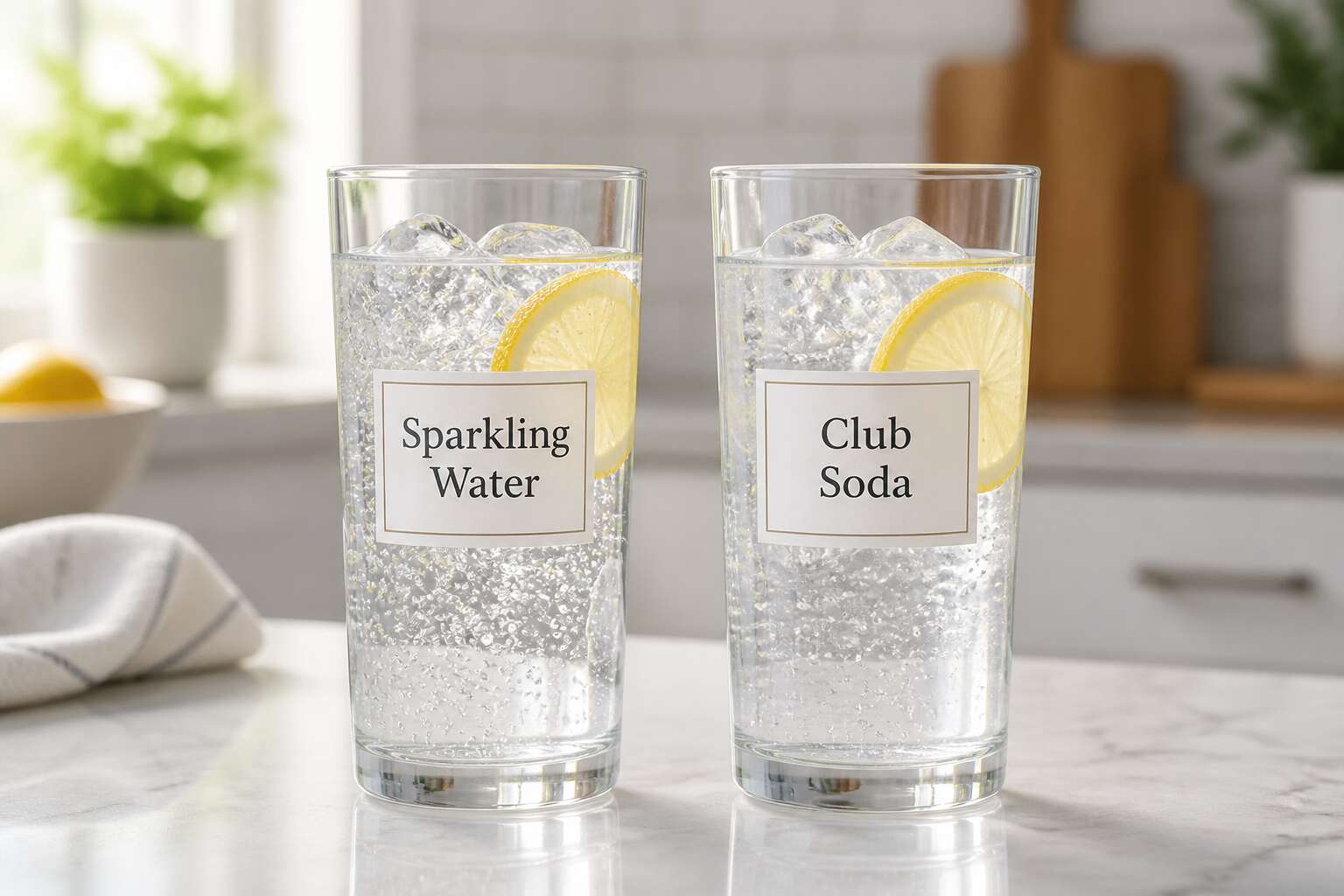
Understanding Sparkling Water and Club Soda
What Is Sparkling Water?
Walk down any beverage aisle in Johannesburg and you will see rows of fizzy bottles that look identical. Yet the contents are not always the same. I often watch shoppers pause, comparing labels, trying to spot the difference. Sparkling water begins as plain water, usually filtered, then gets carbonated by dissolving carbon dioxide under pressure. That process creates the familiar fizz, but the composition varies by brand! Some producers add minerals like sodium bicarbonate or potassium sulfate, which alter the taste and mouthfeel. This is where shoppers start to ask, are sparkling water and club soda the same, because the bottles look nearly identical.
Club soda always contains added minerals. Sparkling water might not. That single difference changes how each behaves in a glass. Common additions include:
- Sodium bicarbonate for a slightly alkaline bite
- Potassium sulfate for a sharper finish
- Sodium chloride, which adds a subtle saltiness
The mineral content in club soda can make it taste saltier, while sparkling water often tastes cleaner.
What Is Club Soda?
Club soda emerged in the late nineteenth century as a bottled remedy for warm afternoons. It is simply water, carbonated under pressure, with a few added mineral salts. Those salts are the entire point. They mimic the natural effervescence of spring water, giving club soda a taut, saline snap on the tongue.
I find club soda to be the quiet workhorse of the bar. Its mineral blend keeps the fizz sharp and the flavour distinct. So when someone asks are sparkling water and club soda the same, the answer hinges on these additions. Sparkling water often arrives untouched, while club soda is engineered. That engineered quality makes it a staple in highballs and spritzers, where its clean bite carries a slice of lime or a splash of bitters!
The Role of Carbonation
Carbonation changes how a drink feels and behaves. It dictates texture, sharpness, and how long the bubbles last. For sparkling water, the gas often comes from natural springs or is injected without added minerals. Club soda gets its fizz from carbon dioxide under pressure, with a blend of salts that stabilise the bubbles. So when someone asks are sparkling water and club soda the same, the role of carbonation provides a clear answer.
Pressure and mineral content are the deciding factors. High pressure creates tiny, tight bubbles that feel crisp. Lower pressure produces larger, softer bubbles that fade quickly. This is why club soda holds its fizz longer in a mixed drink, while sparkling water can turn flat after a few minutes. I have tasted both side by side; the difference is immediate.
- Bubble size affects mouthfeel.
- Carbonic acid adds a subtle tang.
- Mineral salts prolong effervescence.
Common Misconceptions
Common Misconceptions
Many people assume both beverages are interchangeable because they share the same bubble foundation. This mistake leads to surprising results on the palate. Yet the question of are sparkling water and club soda the same really comes down to what the bottle contains, not what the eye sees.
Some believe the ingredients list hardly matters. A quick check reveals otherwise. Sparkling water might carry natural mineral traces, while club soda owes its brisk character to added salts. The confusion deepens when flavours mingle in a gin and tonic or a spritzer. I have watched guests reach for the wrong bottle and immediately notice the shift. The texture changes, the finish changes, and sometimes the entire drink feels off balance.
Another frequent error involves regional naming. In many parts of South Africa, people ask for soda water and receive club soda without realising it. They expect spring water purity. The distinction matters more at home, where a single word on the label determines your entire drinking experience.
Key Differences Between Sparkling Water and Club Soda
Mineral Content and Added Minerals
The mineral profiles tell the real story. When I compare labels, the difference is immediately clear. Sparkling water, particularly natural spring varieties, carries minerals already present in the source. Calcium, magnesium, and potassium appear naturally, but their presence is incidental. Club soda, on the other hand, is a manufactured product. Its mineral content is deliberate.
Manufacturers add specific compounds to create a distinct taste and mouthfeel. Sodium bicarbonate softens the sharpness of carbonation. Potassium sulfate and sodium citrate add a subtle mineral edge. This is why club soda often tastes slightly salty, while sparkling water does not.
- Sodium bicarbonate balances acidity.
- Potassium sulfate contributes a dry finish.
- Sodium citrate adds a faint tang.
So, are sparkling water and club soda the same? Not when you examine the ingredients. One is naturally occurring. The other is engineered for consistency.
Flavor and Taste Profile
The flavor and taste profile offers the clearest separation between these two drinks. When I pour a glass of sparkling water, I taste clean, crisp bubbles with a neutral finish. Club soda presents a completely different experience. The added sodium compounds deliver a pronounced saltiness that coats the tongue.
The bubbles themselves differ too. Sparkling water, especially from natural springs, produces a soft, subtle effervescence. Club soda’s carbonation cuts sharper and leaves a dry sensation at the back of the throat.
Notice the difference in what you taste:
- Sparkling water: pure, clean, without any mineral residue
- Club soda: salty, slightly tangy, with a mineral finish
The question of are sparkling water and club soda the same resolves itself in this direct comparison. Club soda’s engineered minerality was built for cocktails. Sparkling water suits standalone drinking without needing any additions. Flavour alone separates them!
Sodium Content Comparison
Few distinctions matter more to the discerning drinker than what hides in the glass. A serving of sparkling water carries virtually no sodium, often registering under five milligrams. Club soda, however, is deliberately fortified. Compounds like sodium bicarbonate and citrate push its sodium content to fifty or even seventy-five milligrams per serving.
This is where the question of are sparkling water and club soda the same finds its clearest answer. The salt in club soda is not an accident. It is an engineered component, built to mimic a mineral-rich profile that holds its own against spirits in a highball. Sparkling water offers no such intervention. Its purity leaves nothing behind on the tongue, an absence that some drinkers find hauntingly clean, while others find it simply austere.
Carbonation Method and Bubble Size
Carbonation method separates these two beverages with mechanical precision. Sparkling water gets its bubbles from natural springs or from injecting CO2 into still water. Club soda takes the engineered route, adding carbonation in a controlled process. The bubble sizes differ noticeably. Sparkling water produces larger, louder bubbles that vanish quickly. Club soda gives you a finer, longer lasting fizz.
Think of the difference at a braai, when someone hands you a cold glass. The feel on the tongue is distinct.
- Sparkling water: big, short lived bubbles with a sharp bite.
- Club soda: small, persistent streams of bubbles.
For mixers, club soda’s steady fizz survives contact with ice and spirits. Sparkling water’s aggressive bubbles suit solo drinking. So when someone asks are sparkling water and club soda the same, the carbonation method already gives you the answer.
Labeling and Regulatory Standards
In South Africa, labeling rules draw a clear boundary between these two drinks. The Department of Agriculture, Land Reform and Rural Development classifies sparkling water as a natural or carbonated water product with no added minerals. Club soda, however, must declare added minerals like sodium bicarbonate on the label.
This regulatory distinction matters for consumers who scan ingredient lists. One clear example: sparkling water typically lists simply carbonated water or natural spring water. Club soda lists multiple additives. So are sparkling water and club soda the same? Legally, no, the label tells the story. For anyone checking packaging, the presence of mineral additives signals club soda. This standard protects buyer expectations.
Health Considerations and Nutritional Comparison
Calories and Sweeteners
The perennial debate about are sparkling water and club soda the same often begins with calories. Both plain versions deliver zero energy, a fact that delights anyone counting. Yet flavoured siblings frequently smuggle in sweeteners. I find it curious how a single cherry label can transform a virtuous drink into a dessert.
Scanning the ingredients resembles a parlor game:
- Cane syrup adds real sugar and genuine calories.
- Sucralose offers sweetness without metabolic impact.
- Stevia provides a botanical route, though its earthy notes split opinions.
Those distinctions carry health implications beyond weight. Carbonation triggers bloating for some, while others tolerate it effortlessly. The wise approach involves reading labels and listening to your body. Your hydration habits should reflect informed choice, not marketing whims.
Impact on Digestion
The stomach performs its work in shadow, and carbonation disturbs that labor. The question of are sparkling water and club soda the same becomes acute when digestion falters. Both drinks carry gas into the gut, yet their mineral burdens diverge. Sparkling water holds only the gas itself. Club soda introduces sodium bicarbonate or potassium salts that interact with gastric fluids.
For some, the gas passes without incident. For others, it swells the abdomen with dull pressure. The minerals in club soda may offset that discomfort, or they may add their own weight. Digestive responses are personal, shaped by no formula printed on a can.
- Sparkling water can provoke bloating in those prone to trapped gas.
- Club soda may neutralise stomach acid, yet its sodium can irritate sensitive guts.
Reading your own reactions matters more than any label comparison. The body speaks in discomfort, and the wise listener adjusts.
Acidity and Dental Health
A single sip is a pH event. Both sparkling water and club soda carry dissolved carbon dioxide, which forms weak carbonic acid in your mouth. That acidity is the first line of contact with your enamel. The question of are sparkling water and club soda the same extends beyond taste, into how each one affects your teeth.
Plain sparkling water sits at a pH around 4 or 5. Club soda often lands in a similar range, despite its added minerals. The minerals do not neutralise the acid. They can, however, alter the mouth’s buffering capacity.
Here is how the two compare for dental health:
– Sparkling water relies on carbonic acid alone, which rates low on erosive potential.
– Club soda adds sodium or potassium salts, which do little to change acidity but may stimulate saliva flow.
Saliva is your defence. More saliva means faster neutralisation. That difference matters.
Nutritionally, both drinks sit at zero calories and zero sugar. Their health profile is defined by what they lack. No sweeteners, no additives beyond minerals, no nutritional upside. The acid remains the only cost, and for most teeth, it is a small one.
Hydration Benefits
Health Considerations extend beyond the mouth. Both drinks share a simple composition: water and carbon dioxide. The question of are sparkling water and club soda the same gains weight when considering daily fluid intake. Neither provides protein, fat, or vitamins. For most adults, both remain safe choices.
Hydration Benefits are where the two converge. The body absorbs carbonated water as readily as still water. I find that most people assume bubbles slow absorption, but studies confirm otherwise. Both drinks replenish fluids effectively. In South Africa’s climate, adequate hydration carries daily importance.
Several hydration facts apply to both:
- Carbonation does not increase fluid loss.
- Both count fully toward daily water targets.
- Club soda’s minerals offer negligible electrolyte value during routine activity.
The practical answer to are sparkling water and club soda the same rests on preference, not performance. Both serve the same purpose.
Who Should Avoid Them?
Health considerations rarely hinge on the bubbles themselves. The real divergence emerges when daily consumption meets sensitive systems. For individuals managing hypertension, the sodium in club soda can complicate matters. The main question of are sparkling water and club soda the same becomes clinically significant when a doctor has restricted salt intake. Plain sparkling water avoids this pitfall entirely.
Nutritional comparison reveals a stark simplicity. Neither beverage offers meaningful calories, proteins, or fats. That absence defines their appeal. However, the mineral fortification in club soda introduces a variable absent from standard sparkling water. That variable explains why the answer to are sparkling water and club soda the same is not always a simple yes.
Specific groups should exercise caution:
– Those on low sodium diets must scrutinize club soda labels carefully
– Individuals with gastroesophageal reflux disease may find any carbonation aggravates symptoms
– People with kidney stones should consider the oxalate content of certain mineral waters
The question of are sparkling water and club soda the same loses urgency for the general population. For these vulnerable groups, the distinction carries practical weight. Reading labels transforms a casual choice into an informed one.
Culinary and Cocktail Usage
Mixing Beverages and Cocktails
In the realm of mixology, the choice between these two bubbles can alter a cocktail’s personality. A gin and tonic, for instance, relies on the delicate botanical balance of the tonic water, but the effervescent top-up is where clarity matters. Using club soda, with its subtle mineral salts, adds a faint savory edge that can bridge the gap between spirit and mixer. It is the reason a classic Tom Collins has a certain bite that a sparkling water version might lack, as the latter often reads as more neutral and clean on the palate.
This distinction becomes even more pronounced when we consider highball drinks. The Japanese whisky highball tradition values a precise carbonation that lifts the spirit without interference. Bartenders often select club soda for its ability to maintain structure and provide a slight textural weight. For a refreshing spritz or a simple vodka soda, many prefer sparkling water for its purity, allowing the base spirit to shine through without any competing minerality. The choice is less about one being superior and more about the intended flavour architecture.
Consider how these drinks are built:
– A Gin and Tonic benefits from the crisp, neutral profile of sparkling water when you want the gin’s botanicals to be the star.
– A Bloody Mary or a Paloma often calls for club soda, where the added sodium complements the savoury or salty elements of the juice.
– Rum and Coke, when topped up, might see a purist use club soda to keep the rum’s molasses notes distinct.
In the kitchen, the application is equally telling. Chefs use club soda in batters for fish and chips, as the minerals help create a lighter, crispier crust. The effervescence and salt work together to season the food from within. Sparkling water, lacking that mineral punch, will aerate a tempura batter effectively but will not impart the same subtle seasoning. So, when the question arises, are sparkling water and club soda the same, the practical answer in a shaker or a saucepan is a definitive no. The difference is tangible, a matter of taste and application that separates a thoughtful drink from a simple thirst quencher.
Cooking and Baking Applications
In the kitchen, the difference between these two bubbles becomes a matter of texture and seasoning. Club soda’s mineral salts interact with gluten in batters, creating a crust that shatters. Sparkling water aerates, but it does not season.
Take a simple beer batter for hake, a familiar South African preparation. Club soda lends structural integrity and a faint salinity that complements the fish. Sparkling water stays neutral, which suits delicate tempura where the ingredient itself should dominate. Pancakes and quick breads respond similarly; the mineral content shifts the crumb in subtle ways.
- Use club soda for crispy fried fish or onion rings where added salt improves the dish.
- Use sparkling water for light batters where neutrality protects other flavours.
When home cooks ask are sparkling water and club soda the same, the answer appears in the final texture. The minerals in club soda change how proteins and starches behave. Sparkling water simply delivers carbonation. The choice is functional, not philosophical.
Choosing the Right One for Recipes
When a recipe calls for carbonated water, ask are sparkling water and club soda the same before you pour. The answer changes how a drink or dish presents. Club soda brings a minerally bite and faint saltiness that can sharpen a tomato-based cocktail or a citrus marinade. Sparkling water stays neutral, which suits fruit punches or light spritzers where sweetness should lead.
- Use club soda when you want a savoury edge or need to balance rich ingredients.
- Use sparkling water when you want pure carbonation without changing flavour.
- Adjust for salt content, because club soda adds sodium while sparkling water does not.
A highball with whisky and club soda tastes subtly different from one made with sparkling water. Neither is wrong, but one will match the intended character of the drink.
How to Choose Between Sparkling Water and Club Soda
Personal Taste Preferences
Your palate, not the label, decides the matter. The question of are sparkling water and club soda the same becomes almost academic once you sip them back to back. One might land with a brusque bite, the other with a rounder, more forgiving finish. I have watched friends wince at one and smile at the other, and their reasons rarely align.
- Do you want a bracing, almost austere fizz to wake up a quiet afternoon?
- Do you prefer a gentler mouthfeel that lets you forget the bubbles entirely?
These preferences are personal. Some evenings, I reach for the sharper option to cut through a heavy meal. Other days, I want something that disappears into the glass. Trust your tongue, and the decision makes itself.
Health Goals and Dietary Needs
Your health goals should dictate which bubbles land in your glass. The question of are sparkling water and club soda the same becomes practical when you consider dietary needs. Club soda often contains added minerals like potassium bicarbonate, which can affect your electrolyte balance. Sparkling water, especially the unflavoured kind, typically stays neutral.
For those tracking sodium, the difference matters. Some club sodas carry a faint salty note from added sodium compounds. Sparkling water usually sits at zero. If you are managing blood pressure or fluid retention, that distinction is worth more than a shrug. And if you are still wondering are sparkling water and club soda the same, your health tracker will give you the answer.
Consider your goals:
– Hydration without additives: choose plain sparkling water
– A slightly mineral profile: club soda might fit
– Low sodium targets: read the label, always
Your body will tell you what works. Listen to it.
Environmental and Packaging Considerations
The question of are sparkling water and club soda the same takes on a different dimension when you examine packaging. In South Africa, glass dominates the premium end of both categories. Glass recycles endlessly, but its weight pushes up transport emissions. Plastic bottles are lighter, yet the country’s recycling infrastructure remains patchy.
Container size matters. Larger bottles use less packaging per serving than cans. Bulk buying reduces waste, though carbonation fades once the seal breaks.
Home carbonation systems offer an alternative. These devices pressurise ordinary tap water, eliminating single-use containers. The distinction between sparkling water and club soda disappears at the source. The equipment carries its own environmental cost, but it removes bottle production from the cycle. Packaging, then, shapes the answer to are sparkling water and club soda the same more than the liquid itself.
Cost Comparison
Price tags can settle the question of are sparkling water and club soda the same faster than any taste test. In South African shops, a 330 ml can of sparkling water usually costs R12 to R18, while club soda might sit closer to R8. Store brands drop the price further, making club soda the default when every rand counts. For a household drinking several bottles weekly, the difference adds up. Home carbonation changes the numbers: a cylinder refill at roughly R150 turns tap water into sparkling water for about R2 per litre, a fraction of the cost of either option.
- Club soda in single cans is the cheapest immediate buy.
- Sparkling water in 1.5 litre bottles offers better value per glass.
- Home systems carry upfront cost but cut long term expenses.
But your budget may decide which one ends up in the trolley.

0 Comments