The Sweet Illusion – Hidden Sugars and Sweeteners
Natural vs. Artificial Sweeteners in Flavoured Sparkling Water
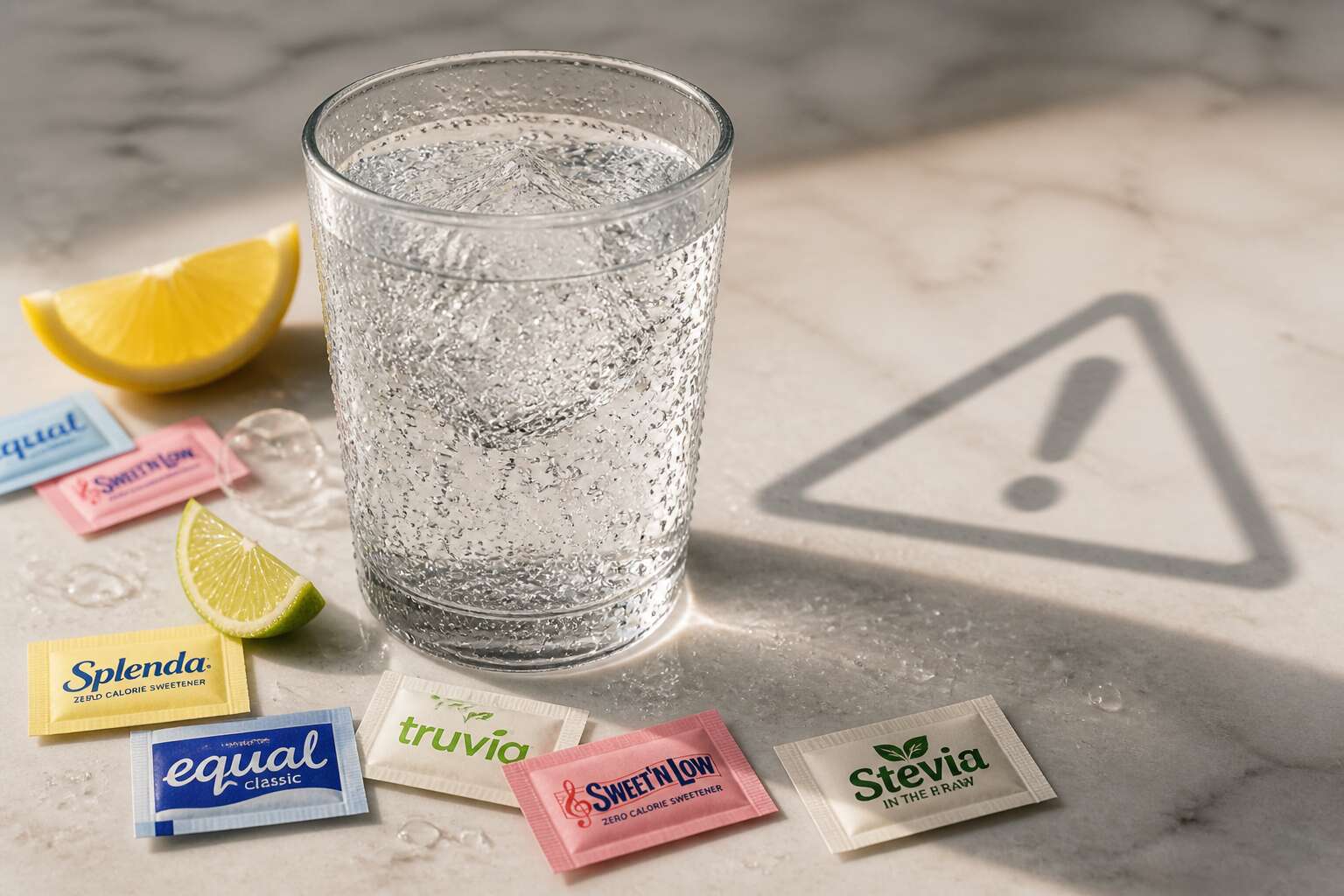
Peer beneath the bubbles and you find a different story. That elderflower spritz carries stealth sugars under names like fruit concentrate and agave nectar. Artificial sweeteners such as sucralose craft the zero calorie illusion while still triggering insulin release. Why is flavoured sparkling water bad for you? Because sweetness without calories confuses the gut-brain axis and amplifies cravings. Your palate dulls to natural fruit, and appetite grows louder!
The culprits sit quietly on the label:
- maltodextrin, a starch that spikes glucose
- acesulfame K, linked to microbiome disruption
- erythritol, known for gastric distress
Each sip delivers a sweetness your metabolism must reckon with. These additives do not disappear in the fizz. They linger in the body’s signalling systems, turning a simple thirst quencher into an endocrine puzzle.
How Zero Sugar Labels Can Be Misleading
The label screams zero sugar, yet your blood sugar may disagree. That claim represents a legal threshold, not a clean bill of health. In South Africa, products can carry this badge even when they contain trace amounts of sweeteners or natural sugars. The logic creates a dangerous loophole where a drink can be 99% water with 1% apple juice concentrate and still wear the misleading crown.
The real deception hides in the fine print. Consider these common label tricks:
1. Serving size manipulation, where a 300ml bottle gets measured as 1.5 servings
2. “No added sugar” applied to products loaded with fruit puree
3. “Naturally sweetened” masking raw honey or maple syrup
The savvy consumer stands at a crossroads. You reach for that can thinking you escaped the sugary trap. Instead you encounter a cocktail of additives designed to mimic sweetness without calories. The term “natural flavour” carries no regulatory weight. It can mean a chemical compound that tastes like elderflower or peach, nothing more. Your body receives the sweet signal, releases insulin, and waits for glucose that never arrives. This metabolic confusion forms the core of why flavoured sparkling water bad for you. Even the “healthy” options at your local Woolworths often rely on stevia blends that carry their own bitter aftertaste masked by erythritol. The zero sugar label protects the manufacturer, not your pancreas.
The Impact of Sweeteners on Insulin Response and Cravings
Sweetness without calories sounds like a bargain. I understand the appeal. Then the insulin response begins, and it is not subtle! This is why flavoured sparkling water bad for you, even when the nutrition panel looks innocent.
Hidden sweeteners, like sucralose or acesulfame K, are potent compounds. They bind to taste receptors hundreds of times stronger than sugar. Your gut prepares for glucose that never arrives. The result is a spike in insulin and a sharper hunger signal.
Here is the craving sequence:
- Sweetness hits your tongue.
- Insulin rises.
- Cravings follow.
Your appetite grows. You want another drink, then a biscuit, then something starchy. The cycle drives overeating. The can promises refreshment, but your metabolism registers something different.
Reading the Ingredient List: What to Look Out For
The front of the can promises citrus mist and mountain spring. The back tells a different story. Ingredient lists order everything by weight, so the first item matters most. If water comes first, that’s good. Then come the natural flavours, which is another term entirely.
Here is what to scan for:
- Erythritol or xylitol, sugar alcohols with digestive consequences
- Citric acid, which sounds harmless but is often derived from mould cultures
- Anything ending in “ate” that you cannot pronounce
South African regulations allow manufacturers to group flavour compounds under one blanket term. This is why flavoured sparkling water bad for you hides behind clean packaging. The label may read zero calories, but the ingredient list reveals the negotiation. Whether flavoured sparkling water bad for you is a genuine concern comes down to the names on the back.
The Acid Test – How Carbonation Affects Your Teeth
Understanding the pH Scale and Acidity Levels
Carbonation turns water into weak carbonic acid. This drops pH well below neutral. Still water sits around 7, while many flavoured sparkling waters land between 3 and 4. That is closer to vinegar than to tap water.
Here is how common drinks stack up on the pH scale:
- Still water: pH 7
- Flavoured sparkling water: pH 3 to 4
- Orange juice: pH 3.5
- Cola: pH 2.5
Acid wears down enamel. The debate about flavoured sparkling water bad for you usually targets sugar, yet carbonation is the hidden culprit. I see people sipping these cans all day, never realising the acid exposure. The answer to flavoured sparkling water bad for you depends on drinking habits, not the bubbles alone!
The Erosion of Tooth Enamel: A Direct Comparison to Soda
Every sip bathes your teeth in acid. Enamel dissolves at pH 5.5, and flavoured sparkling water sits between 3 and 4, so each can triggers demineralisation almost immediately. Saliva repairs the damage, but it needs time and neutral conditions. Sipping throughout the day interrupts that repair cycle before it completes.
The comparison to soda is uncomfortable. Cola starts more acidic at pH 2.5, yet total acidity tells a different story. The fruit acids in sparkling water increase buffering capacity, meaning the acid clings to enamel longer before neutralising.
- Cola often contains calcium and phosphate additives that partially shield enamel
- Flavoured sparkling water has no such minerals, leaving teeth fully exposed
So is flavoured sparkling water bad for you? For your teeth, the frequency of exposure matters more than the product itself.
Is the Citric Acid in Flavoured Sparkling Water a Concern?
Flavoured sparkling water now occupies whole aisles in South African supermarkets, yet most consumers still picture harmless bubbles. Carbonation does produce carbonic acid, but that weak compound loses its acidity rapidly. The sharper threat arrives as citric acid, often added to lemon, lime, and berry drinks.
Citric acid operates differently on teeth. It binds with calcium in the enamel surface, a process known as chelation, and drags minerals out of the tooth structure. That leaves the enamel porous and slow to recover. Sipping throughout the morning lets one acid follow another, and the cycle repeats before saliva can restore balance.
Is flavoured sparkling water bad for you? The acid profile deserves more attention than the fizz.
- Carbonic acid fades quickly.
- Citric acid clings to enamel.
- Repeated exposure prevents repair.
Mitigating the Damage: Tips for Drinking Without Harm
Carbonation presents a quieter threat than citric acid, yet it compounds the damage. Each sip forms carbonic acid on the enamel, softening the surface for up to thirty minutes. Sip all morning and the teeth rarely regain their hardness between exposures.
The factors that make flavoured sparkling water bad for you accumulate silently. The solution is behavioural rather than chemical. Use a straw to guide liquid past the teeth. Rinse with still water after finishing the can. Time your sparkling water around meals, when saliva flow runs highest.
- Drink the whole can at once instead of nursing it for hours.
- Wait thirty minutes before brushing to let the enamel harden again.
- Swap every second can for plain water.
Moderation changes the verdict. The pattern, not the product, decides whether the enamel survives. Keep exposure brief, and the teeth manage the rest!
The Gut Reaction – Carbonation and Digestive Health
Carbon Dioxide and Digestion: Does It Really Cause Bloating?
The carbon dioxide that gives flavoured sparkling water its fizz travels through the digestive tract as a gas. Swallowed in quick sips, it distends the stomach, and for many South Africans that pressure translates into immediate bloating and a fullness that refuses to settle.
The mechanics are straightforward. CO2 dissolves into carbonic acid in the mouth, then diffuses into the gut where it must find an exit. Some stomachs handle this process with quiet composure. Others respond with trapped gas, cramping, and an audible grumble long after the glass is empty. None of this constitutes permanent damage, yet the transient discomfort is deeply felt by those who experience it.
This visceral reaction is why the question of whether flavoured sparkling water bad for you deserves attention beyond sweeteners and acids. Sometimes the problem rests not in what is added, but in the bubbles themselves.
Impact on Stomach Acid and Nutrient Absorption
The subtle shift in stomach acid is where the quiet trouble begins. Carbonated water entering the gut briefly raises acidity before the body scrambles to neutralise it. That extra effort, repeated daily, taxes the digestive system. For anyone asking whether flavoured sparkling water bad for you, this acid balancing act deserves consideration.
Digestion relies on precise pH levels. A stomach stretched with gas and dilute acid processes nutrients less efficiently. The consequences appear in predictable ways:
- Protein breakdown slows noticeably
- Calcium and magnesium absorption weaken
- Enzyme activity loses its rhythm
The gut lining also faces stress. Studies on carbonated beverages show measurable changes in gastric activity, though long term consequences remain debated. When weighing whether flavoured sparkling water bad for you, the discomfort some South Africans feel may be their digestive system signalling an overload it was never designed to handle.
Separating Facts from Myths: The Power of Perception
Expectations influence digestion more than most South Africans realise. Tell a person their flavoured sparkling water will cause digestive chaos, and their stomach often produces real discomfort in response. This is the nocebo effect, the direct opposite of the placebo response. I have watched reasonable people blame bubbles for gut sensations that had more to do with their own anticipation. Perception drives much of that discomfort.
Perception changes digestive behaviour:
- Anticipation of pain increases gut sensitivity
- Anxiety slows gastric motility
- Worry creates muscle tension in the abdominal wall
These reactions occur before carbonation reaches the stomach lining. Whether flavoured sparkling water bad for you may depend on the drinker’s mental state rather than the drink’s chemistry. Two people sip the same beverage. One enjoys it, the other feels unwell. The liquid is identical. The minds are not.
The Role of Phosphoric Acid in Bone Health
A single can of flavoured sparkling water can stretch the stomach wall enough to trigger mechanoreceptors that report false satiety. In sensitive individuals, this activates a vagal response that slows gastric emptying and increases reflux events. The bubbles themselves are inert; the pressure they create is not.
Phosphoric acid appears in some flavoured sparkling water brands as a tartness enhancer. It binds to dietary calcium and raises urinary calcium excretion. With sustained daily intake, this shifts calcium balance toward loss, which can thin bone mineral density.
- Carbonation stimulates the lower oesophageal sphincter to relax
- Phosphoric acid increases urinary calcium excretion
- Both effects accumulate with frequent consumption
So whether flavoured sparkling water bad for you depends on the body’s individual response and the acid profile of the can.
The Hidden Sodium and Additives – More Than Just Bubbles
Why Some Flavoured Sparkling Waters Contain Sodium Bicarbonate
Sodium bicarbonate appears in sparkling water as a pH balancer. Major brands use it to tame the sharp bite of carbonic acid and mask the acidity of added citric acid. This additive explains why flavoured sparkling water bad for you concerns exist. A single can delivers between 40 and 70 milligrams of sodium, often with no warning on the front label.
For someone watching blood pressure, that hidden sodium adds up across multiple cans per day. Look for sodium bicarbonate or sodium citrate in the ingredient list. The reasons manufacturers include it are specific:
- Neutralising acidity to extend shelf life
- Softer carbonation for broader appeal
- Disguising metallic notes from artificial flavourings
Each purpose serves the product, not the drinker. This is the quieter mechanism by which flavoured sparkling water bad for you becomes a practical concern, independent of sugar or sweetener content.
Preservatives, Flavours, and Additives: The Unseen Ingredients
Crack open a can of flavoured sparkling water and expect nothing more than carbonation. The label lists three ingredients. The reality is more crowded. Preservatives like potassium sorbate and sodium benzoate slip in to prevent microbial growth, stretching shelf life far beyond plain water. The vague term ‘natural flavours’ can mask dozens of chemical compounds engineered to mimic a fruit profile.
The concern that flavoured sparkling water bad for you is not baseless when you inspect these unseen additives. Some preservatives interact with acidic environments to form benzene. Many brands add artificial colouring to simulate juice.
Consider what else hides beneath the fizz:
- Potassium benzoate, a preservative linked to cellular stress
- Calcium disodium EDTA, a stabiliser for colour and flavour
- Hidden sweeteners that appear under unassuming names
Each additive serves a mechanical purpose. None serves your body.
The Clean Water Fallacy: How Sparkling Changes the Game
Sodium hides in plain sight within flavoured sparkling water, often listed as sodium bicarbonate or a simple variation of salt. The fizz itself masks a subtle brininess that many drinkers never notice, yet the body registers every milligram. For those monitoring blood pressure or fluid balance, the cumulative intake across multiple cans per day becomes a genuine concern. Plain water contains negligible sodium. Flavoured options can carry anywhere from 10 to 30 milligrams per serving, which compounds quickly when consumption replaces your daily hydration ritual.
The clean water fallacy persists because the product looks and feels like water. It is not water. It is a manufactured beverage with a manipulated mineral profile. Consider what the label does not promote:
– Sodium-based buffers used to adjust acidity
– Magnesium and calcium compounds for mouthfeel
– Potassium salts that affect flavour perception
These additives exist to solve production problems, not to enhance your health. Every sip delivers carbonic acid, flavour compounds, and buffering agents that plain water simply does not contain. The question of whether flavoured sparkling water bad for you depends heavily on this distinction. When you drink it, you are consuming a processed product. The transparent appearance creates an illusion of purity, but clarity in a glass reveals nothing about chemical composition. Your kidneys process these additives differently than they process simple H2O, placing an unnecessary burden on your filtration systems over time.
Weighing the Pros and Cons – Is It a Health Risk or a Trend?
Comparing the Health Benefits: Flavoured Sparkling Water vs. Soda
When the grocery shelf offers a faceoff between a sugary soda and a flavoured sparkling water, the better choice seems obvious. I have watched friends swap one for the other with quiet pride. But is flavoured sparkling water bad for you? The honest answer requires weighing two realities at once.
Compared to soda, the benefits are real: fewer calories, no sugar spike, and a clean break from empty sweetness. Yet the comparison flatters the sparkling option without making it innocent. Its acidity and additives carry costs of their own, and those costs scale with frequency. For a person replacing one daily soda, the trade is mostly positive. For someone sipping cans throughout the day to avoid plain water, the risks begin to tilt the scale.
Who Should Avoid Flavoured Sparkling Water Altogether?
The trend label has made flavoured sparkling water feel virtuous. Yet the question of whether flavoured sparkling water is bad for you cannot be answered with a blanket no. It is a nuanced product, more about context than categorical harm.
Consider who reaches for it. A person with acid reflux may find each can aggravates their oesophagus. Someone managing blood pressure should check for hidden sodium bicarbonate. Children face greater erosion risk from sustained sipping.
- People with chronic reflux or GERD
- Those on sodium restricted diets
- Children with developing enamel
For these groups, the risks are not abstract. The habit becomes the problem, and the trend fades into a quiet health burden.
The Verdict: Moderation and Mindful Consumption
The flavoured sparkling water bad for you debate often ignores a simple truth: quantity and timing matter more than the product itself. For many South Africans, a chilled can is a refreshing break from sugary sodas. That choice has real merit. Yet drinking it throughout the day, away from meals, creates a constant acid bath for teeth and stomach alike.
Look at the trade offs honestly:
- It replaces sugary drinks, which lowers calorie intake.
- It brings enamel erosion and bloating when overdone.
Neither benefit nor risk wins outright. The verdict lands on moderation and mindful consumption. If you enjoy one can with lunch, flavoured sparkling water is not your enemy. Make it a habit, and the scales tip. That is the nuance behind every headline.
Are Natural Flavours a Red Flag? Decoding Marketing Terms
Walk into any Johannesburg supermarket and you will spot entire aisles devoted to colourful cans of fizzy water. The flavoured sparkling water bad for you question now follows shoppers everywhere. Some treat these drinks as a harmless ritual. Others call them a hidden hazard. Neither side captures the full picture.
One can with a meal delivers a clean, low calorie break from soda. Drinking it all day, far from food, exposes your teeth and stomach to constant acidity. The trend is manageable. The dose is not.
Then comes the wording. “Natural flavours” appears wholesome. In reality, that term covers dozens of synthetic ingredients created in a lab. It is a marketing signal, not a nutritional fact. The label alone does not prove harm, and it does not guarantee safety either. What matters is how often and how much you consume.


0 Comments